MAKE BY HAND — TRUST YOUR TASTE
Picklestone
Vegetables are easy to buy. The hard part is finishing them—before they wilt in the back of the fridge, or get trimmed into peels, roots, and scraps. Globally, roughly one-third of food produced is lost or wasted.
Picklestone is my answer to that quiet everyday loss: a Japanese-style pickling pot for making Japanese pickles (tsukemono)—a preserved vegetable staple. In about five minutes, you cut, salt, and press—then let time do the work overnight. Pressing reduces bulk and makes it easier to eat vegetables in satisfying volume, including parts you'd normally discard.
It's not "cooking more." It's saving more—and turning what you already have into something you'll actually look forward to eating.
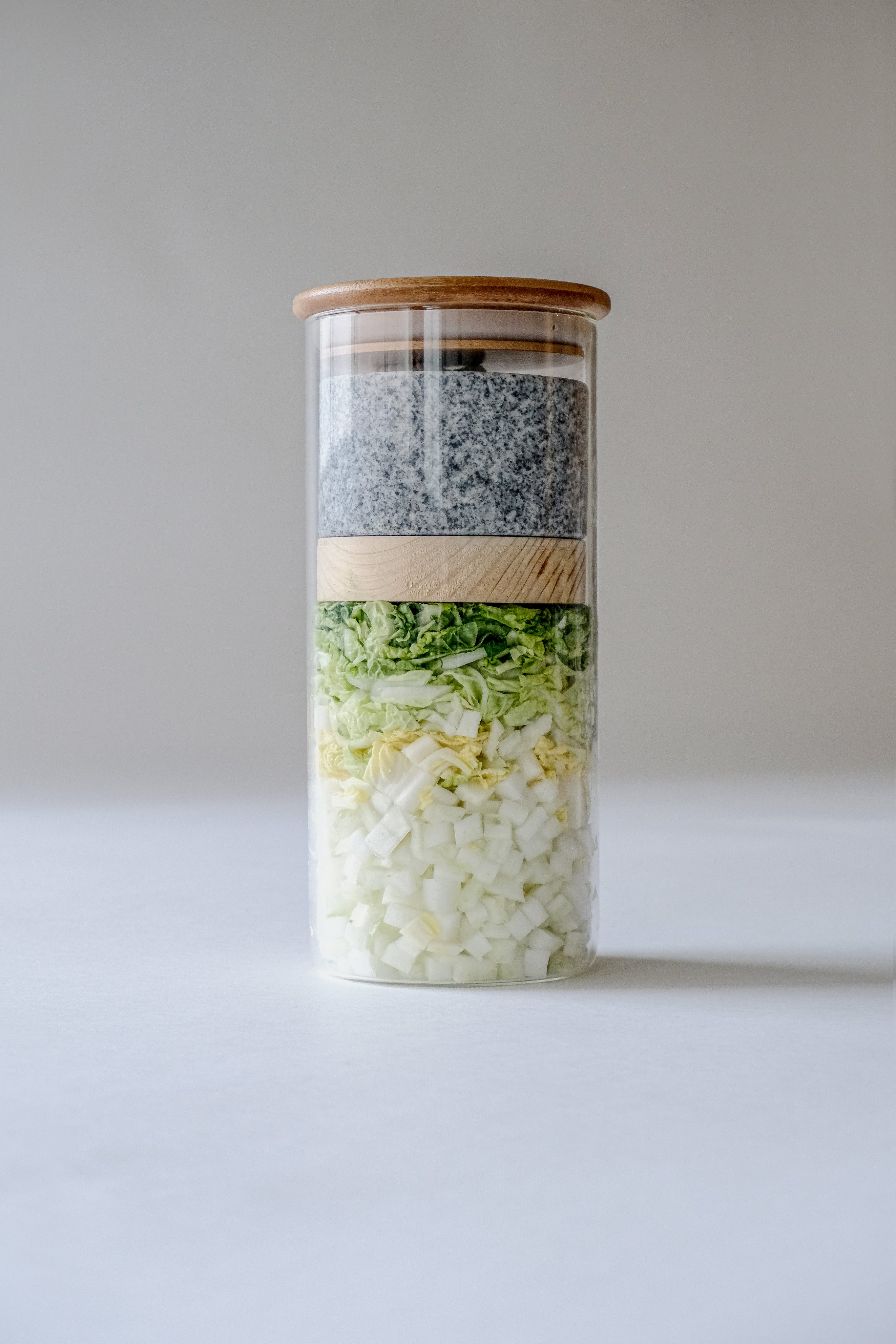
Picklestone.220 is designed to sit right next to a milk carton—because the "milk row" is the most valuable real estate in your fridge. Diameter ~100mm, height ~215mm, and about 1170g as a set (jar + lid + stone), so it presses steadily without wobbling.
Big enough for family portions, make-ahead staples, or recipe testing. Same ritual, just more payoff: cut, salt, set the stone—future-you gets rescued.


Why Stone
Most people's "pickles" are vinegar pickles. So outside Japan I kept getting the same question—again and again: Why put a stone on it? How is this different from pickles? What does the weight actually do?
In Japanese pickles, pressure is the accelerator. A real weight releases water faster, tightens texture, and moves flavor sooner—often within hours to overnight. Springs and hand pressure vary; stone doesn't. Picklestone keeps the old logic (press with stone) in a form that fits modern fridge life. The stone isn't a shortcut—it's a switch that lets time start working.
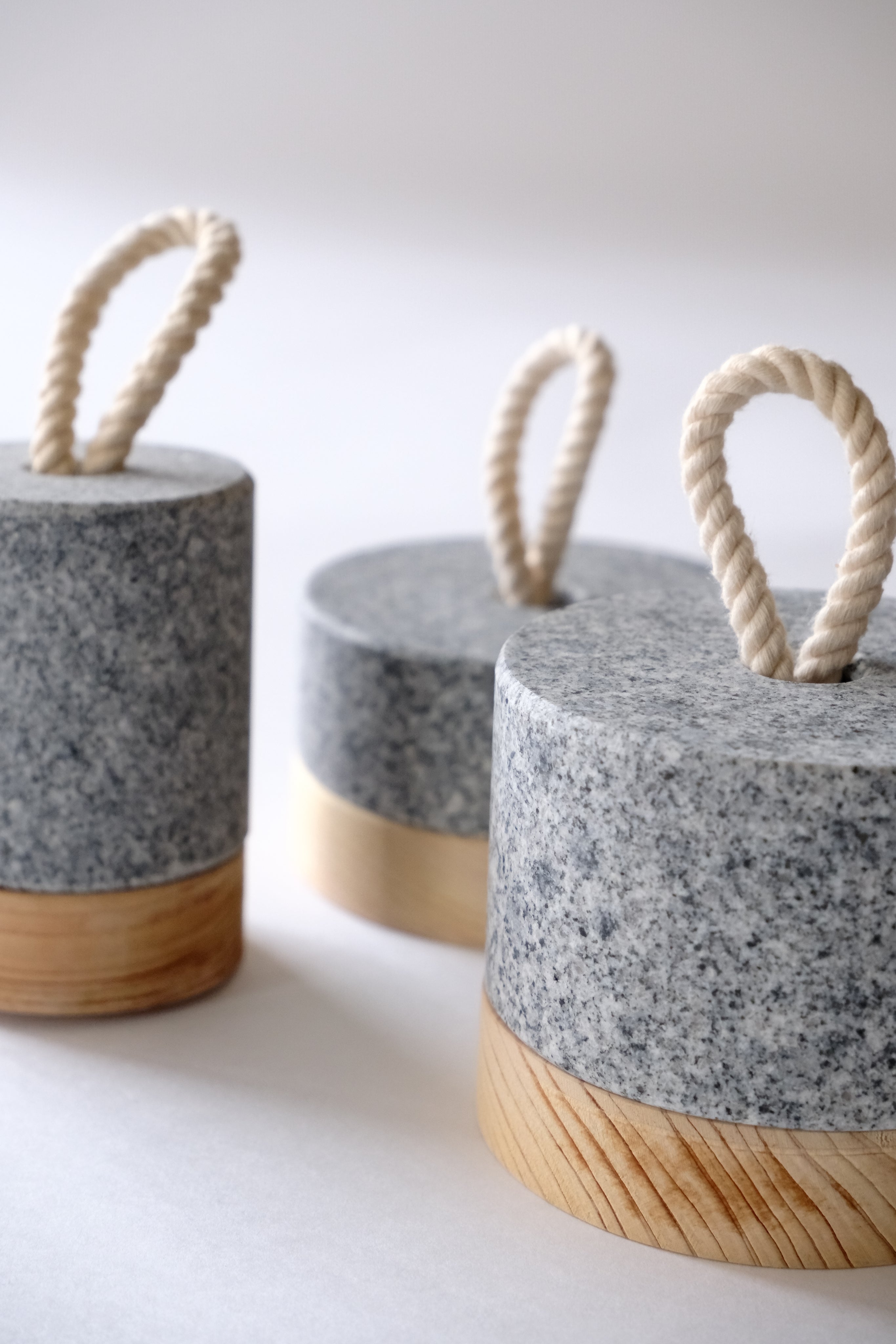
We chose Aji stone for the weight—often called "the diamond of granite," known for its fine grain, durability, and quiet polish that deepens over time.
The first human tool was stone; this weight is both primitive and future-facing. You feel it: cool in the hand, steady on the jar, silent on the counter.
Fermentation
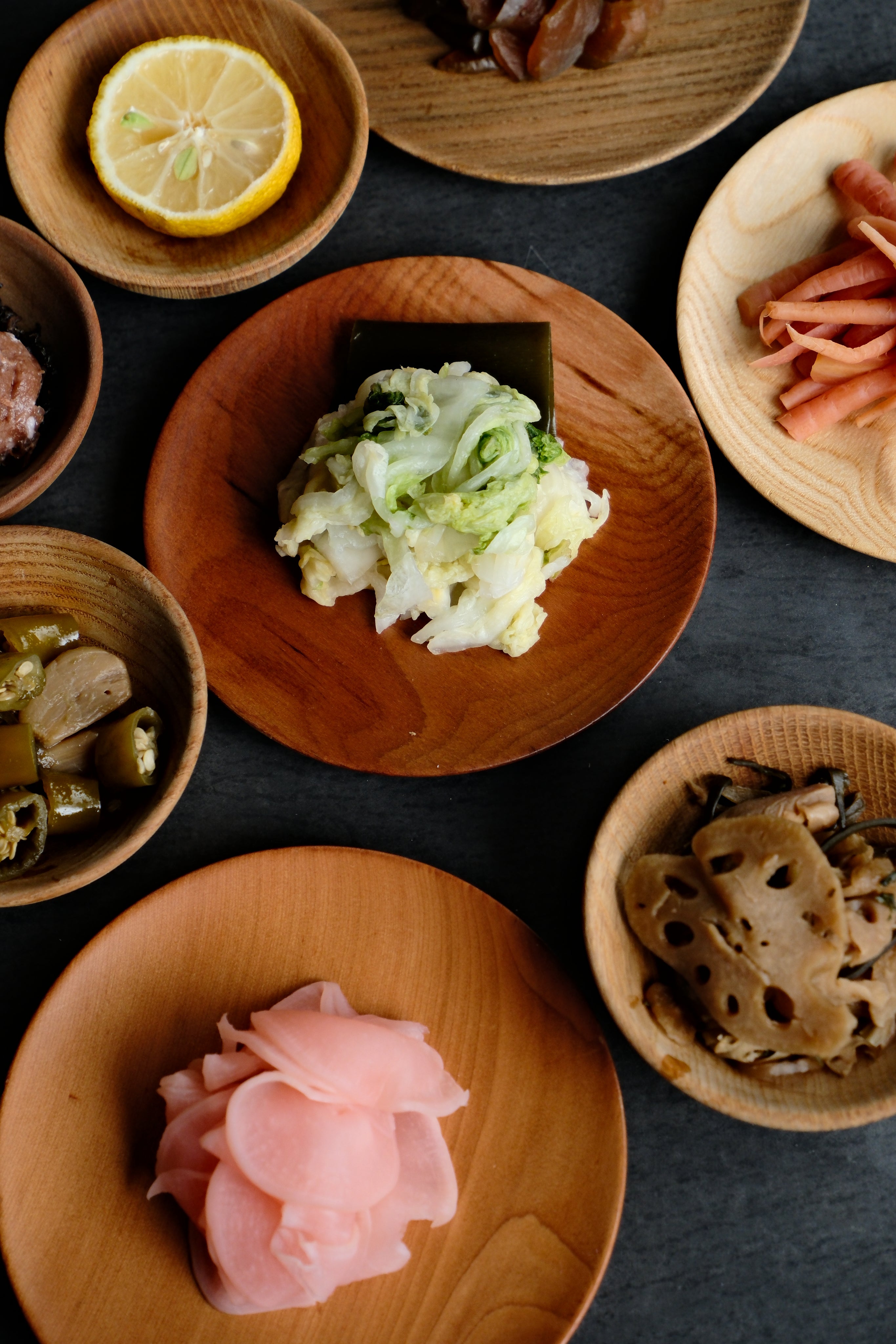
What happens inside Picklestone isn't magic—it's salt + time. Add about 0.9–3% salt to the weight of your vegetables, press, and let microbes do their work: acidity rounds, umami rises, texture tightens.
Go saltier for longer keeping, lighter for fresher quick pickles. The silicone cap helps keep odors from leaking into the fridge.
Fermentation is not "neglect." It's observation—and a quiet reset of pace.
what they're saying
"Because you can see the change, the story lands fast."
A design-led way to explain Japanese pickling.
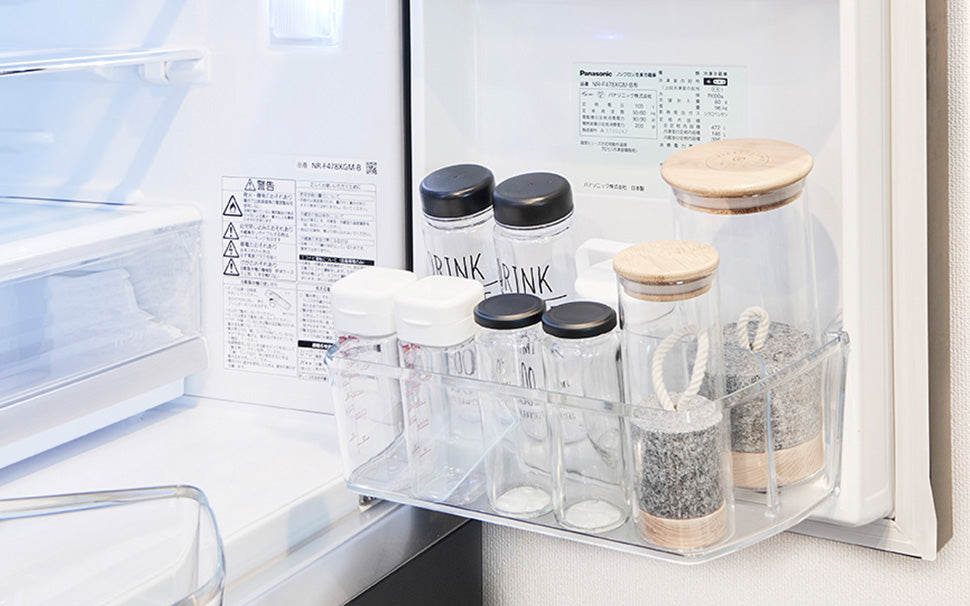
Picklestone is a tool you can leave on the counter—because the process is part of the view. The clear glass doesn't hide change; it teaches it. Hinoki wood can add a natural barrel-like aroma (boil it first if you want it softer).
No dishwasher—wipe, dry, keep it moving. This isn't "precious living." It's a durable standard you reach for without thinking. Custom logo options are available on request.